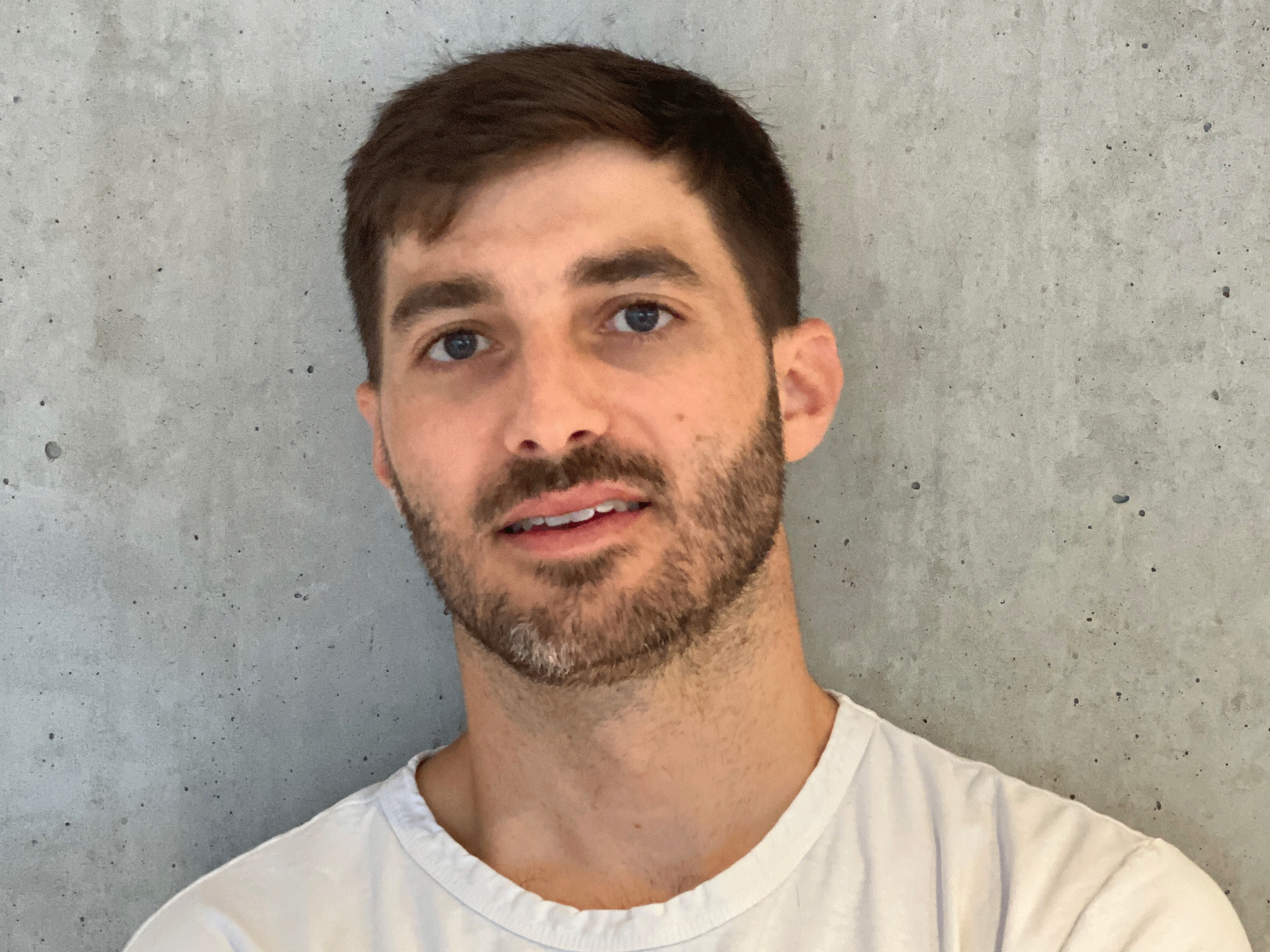
Wilson Carroll headshot

Wilson Carroll

Lecturer

Contact

Telephone
Office
East Architecture

Wilson Carroll

Lecturer


Education

Georgia Institute of Technology, Bachelor of Science in Architecture, Highest Honor, 2010
Yale University School of Architecture, Master of Architecture, 2017

Keywords

Augmented Reality, Theological Aesthetics

Biography

Mr. Carroll is the lead architect at More Than Matter, an Atlanta-based architecture and design office. He holds professional licenses in New York, Georgia, Kentucky, and North Carolina and has nearly fifteen years of experience, including tenures in the offices of Thomas Phifer and César Pelli. He’s interested in the intersection of theology and aesthetics. Wilson received his Bachelor of Science from the Georgia Institute of Technology and his Master of Architecture from Yale University. Wilson has previously taught at Kennesaw State University and is currently a lecturer at the Georgia Institute of Technology. He is the co-founder of his family of five. In 2022 Wilson and his wife co-authored and published the meditation guide Atlas Rise, and in 2023 he started Flixkit, a software company specializing in short-form cinematic storytelling.

Statement of Teaching Interest

My teaching focuses on architecture as a discipline of design, narrative, and meaning, with particular attention to the idea of dwelling—how buildings support daily life, memory, ritual, and belonging. I am interested in helping students understand architecture not only as an object, but as a framework for inhabitation shaped by culture.

In studio teaching, I emphasize clarity of design intent, strong conceptual narratives, and the translation of ideas into precise architectural form. I encourage students to develop positions rooted in place and use, and to test those positions through drawing, model-making, and critique.

Statement of Research Interest

My research focuses on architecture as a cultural framework for dwelling, and on whether design can recover a sense of meaning and continuity in the contemporary built environment. My work examines the patterns and consequences of current development practices, with particular attention to the decline of rural America and the opportunities for architecture to address housing, infrastructure, and community life within these contexts.

My research is design-led, integrating historical precedents and typological analysis. I explore architecture’s capacity to give form to memory, ritual, and shared meaning, with research interests that include cemeteries, memorials, and sacred spaces as sites where architecture engages questions of time, belief, and theology.