
By Melissa Alonso | October 1, 2025 - Atlanta, GA
When Michael Arad (M.Arch ’99) first stepped onto Georgia Tech’s campus as a graduate student, he couldn’t have imagined how profoundly the Institute’s lessons on civic space would shape his architectural career. Today, as a partner at Handel Architects in New York and the designer of some of our most important national memorials, Arad has become one of the world’s leading voices on how architecture can help communities process grief and build shared meaning.
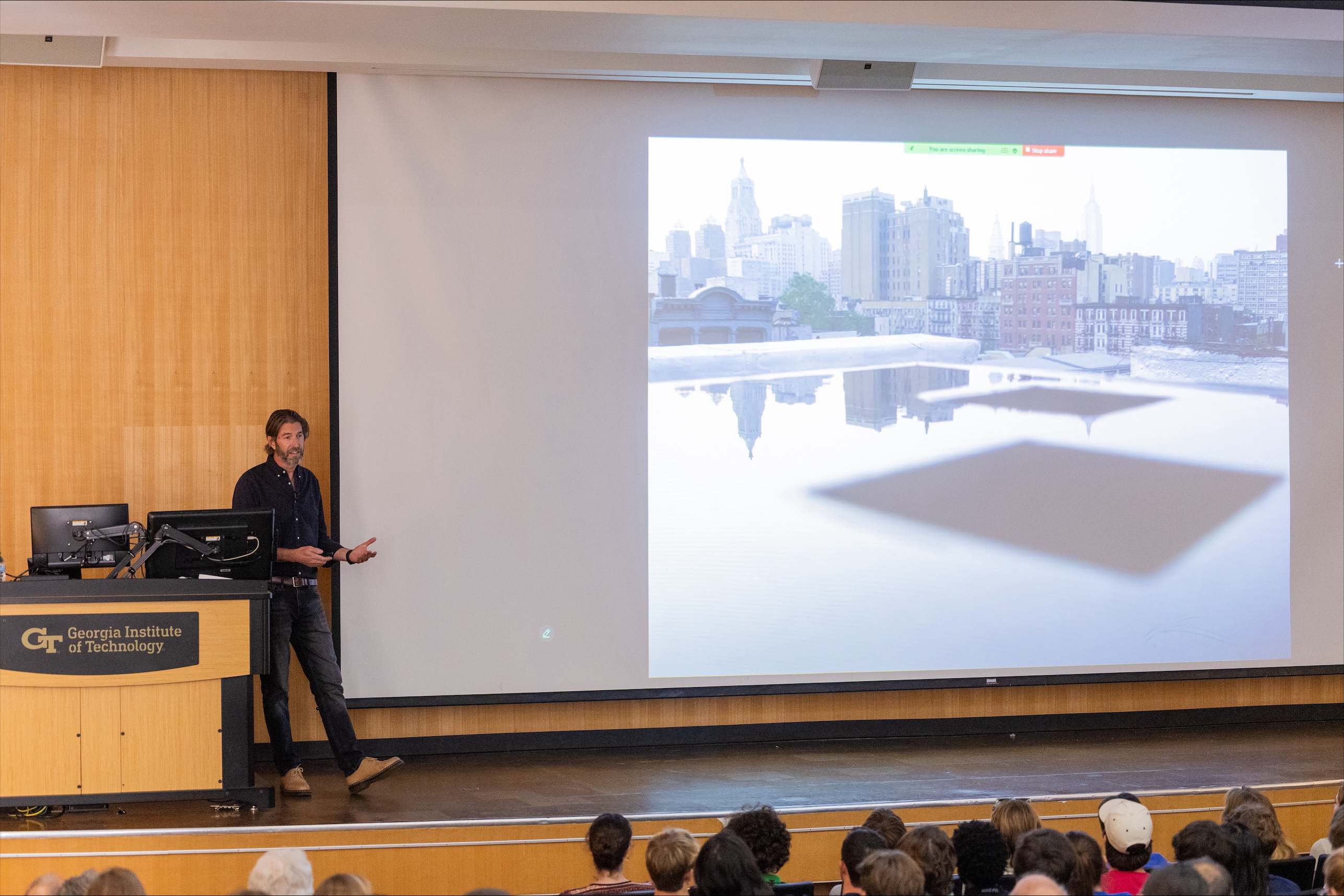
On his return to campus as part of the School of Architecture lecture series, Arad explored the theme “Building Community Through Commemoration.” His talk drew on his most well-known projects—the 9/11 Memorial in Lower Manhattan and the Emanuel Nine Memorial in Charleston—while also offering insights for students preparing to shape the built environment of the future.
Commemoration as Community-Building
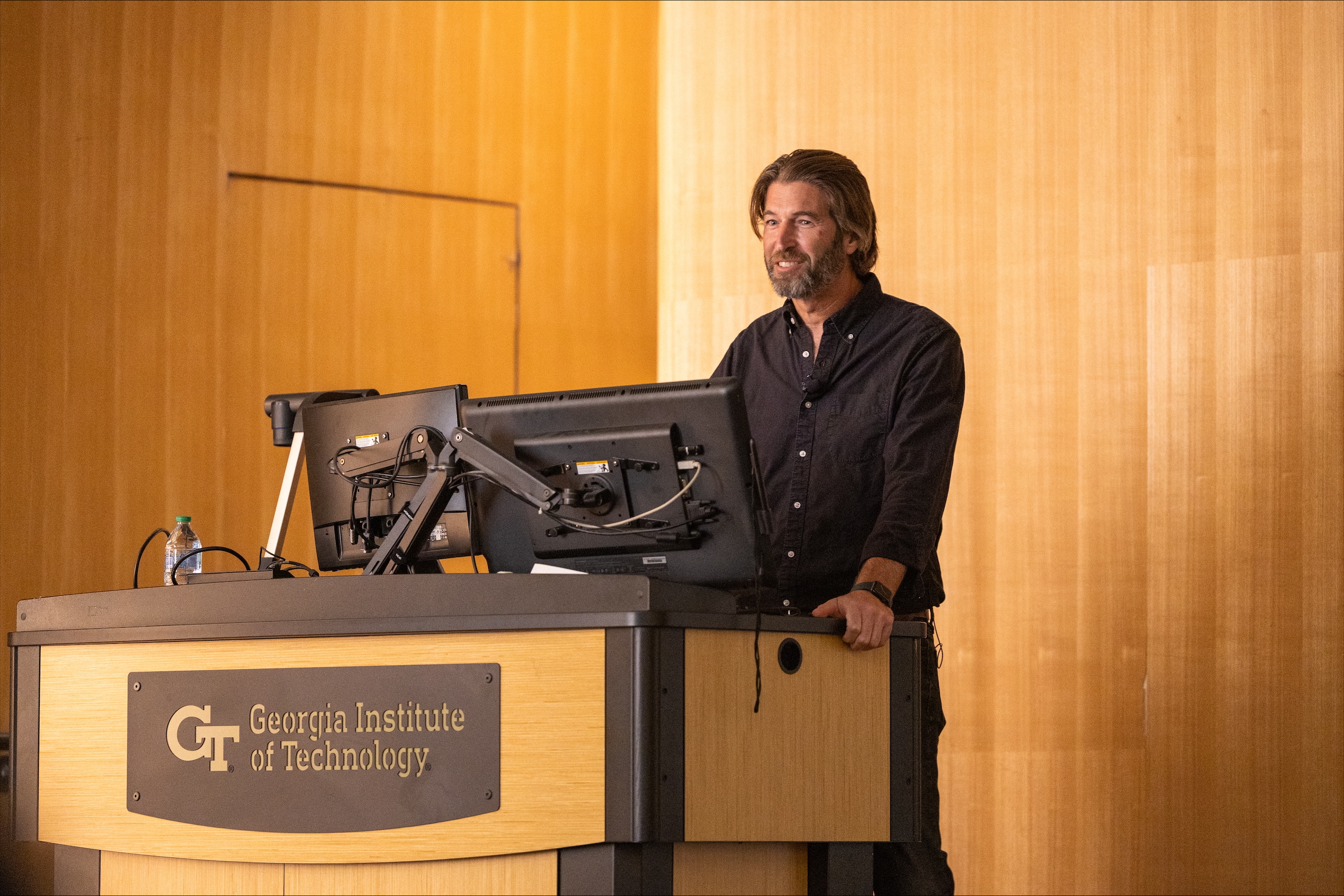
For Arad, the foundations of that philosophy trace back to his years at Georgia Tech. He credits the late Professor Doug Allen, whose History of Urban Form course deeply influenced his thinking. “Doug stressed the importance of the civic realm, that these shared spaces we have are profoundly important to our conception of who we are as a society,” Arad recalled.
That lesson became visceral after 9/11, when public spaces like Union Square and Washington Square gave New Yorkers room to grieve and connect. “We build our cities, and they, in turn, build us,” he said, paraphrasing Churchill. But that same spirit of civic healing continues in his design for the Emanuel Nine Memorial in Charleston, South Carolina, honoring the victims of the 2015 church shooting. Arad described how the design process began not with drawings, but with a community conversation about forgiveness. “You can’t design without first engaging the community and understanding their pain—but also their hopes for what a memorial could accomplish,” he explained.
For students, this underscored his central theme: that architecture is at its best when it broadens the circle of voices shaping it. Martin Swanson, a second-year M.Arch. student, said that moment reframed how he thought about design competitions. “One thing that stood out to me was during competition [regarding the World Trade Center memorial]… he added this thing, a platform that was on-grade with the surroundings, so it allowed for more connection between the people and the site,” Swanson reflected.
Rohan Sood, also in his second year, added: “It was kind of great that the competition had a certain way they wanted to go… and he’s like, ‘No, that’s not how I feel.’ Also, just seeing the different scales he was working at—big and small—you don’t get that perspective from reading about it. It was special to hear it from an alum.”
Lessons from Georgia Tech

Arad explained that for him, the very act of memorialization is inherently communal. “The very act of commemoration, especially in the public realm, is designed to build community, to carry forward a legacy, to allow us to remember collectively what happened, but also to build a shared understanding,” he said.
While his early professional projects were driven by development needs like office or residential design, working on memorials forced him to expand his approach: “You need to broaden the number of voices which are engaged in the process. You have to step back, allow other voices to come in, and have the confidence to delay engagement with a singular idea until you’ve really listened,” Arad reflected.
This focus on dialogue has carried through his career, including the Emanuel Nine Memorial. Before any sketches were drawn, prospective designers were asked to reflect on forgiveness and the community’s hopes for the future. “You can’t design without first listening,” Arad emphasized.
Designing for Generations
Students often ask how architects can design work that will endure symbolic shifts across generations. For Arad, the answer lies in grounding designs in what he calls “irreducible truths.”
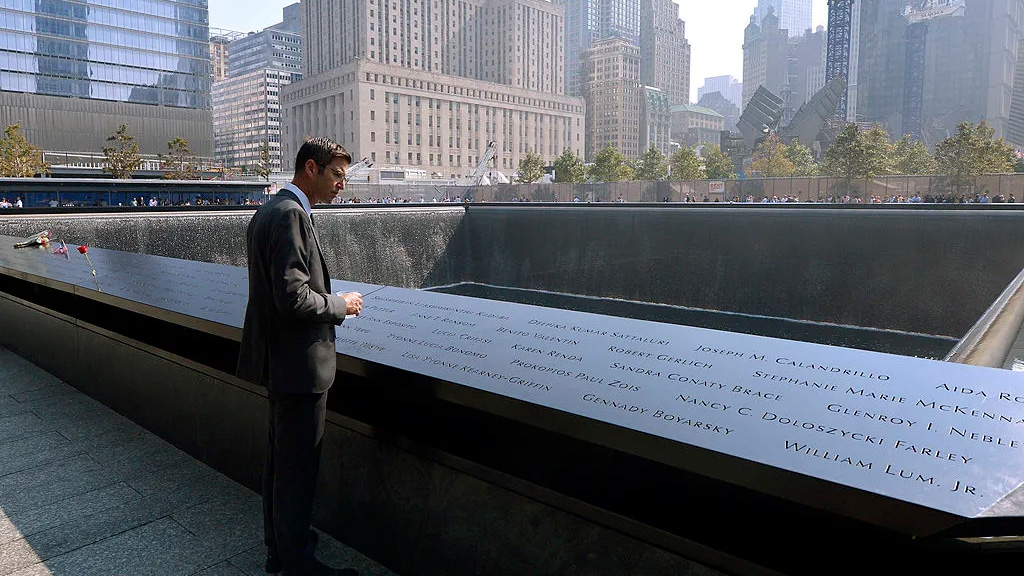
“The names of the people who perished are inscribed around the pools. The pools mark the footprints of the towers. The memorial is built at the site of this attack. You have to let those elements inform how you present facts to people who come to visit,” he explained.
Interpretation, he warned, can be dangerous if it overshadows history. Instead, his goal has always been to highlight the story that already existed before design began.
Far from limiting creativity, Arad sees design constraints as catalysts for innovation. He described how a late-stage request from New York City’s Mayor’s Office of People with Disabilities reshaped the 9/11 Memorial’s pools: “We were asked to accommodate sight lines for people seated in wheelchairs so their experience was equivalent to those standing. That demand forced us to change the corners of the pools. The answer wasn’t immediately evident, but the project is better for the change that was made,” he said.
For students, this was a reminder that architecture is rarely a straight path from sketch to completion. “Design is always an exercise within a set of constraints, and creativity emerges from how you respond to them,” Arad added.
Advice for Emerging Architects
In closing, Arad emphasized that design is rarely linear.
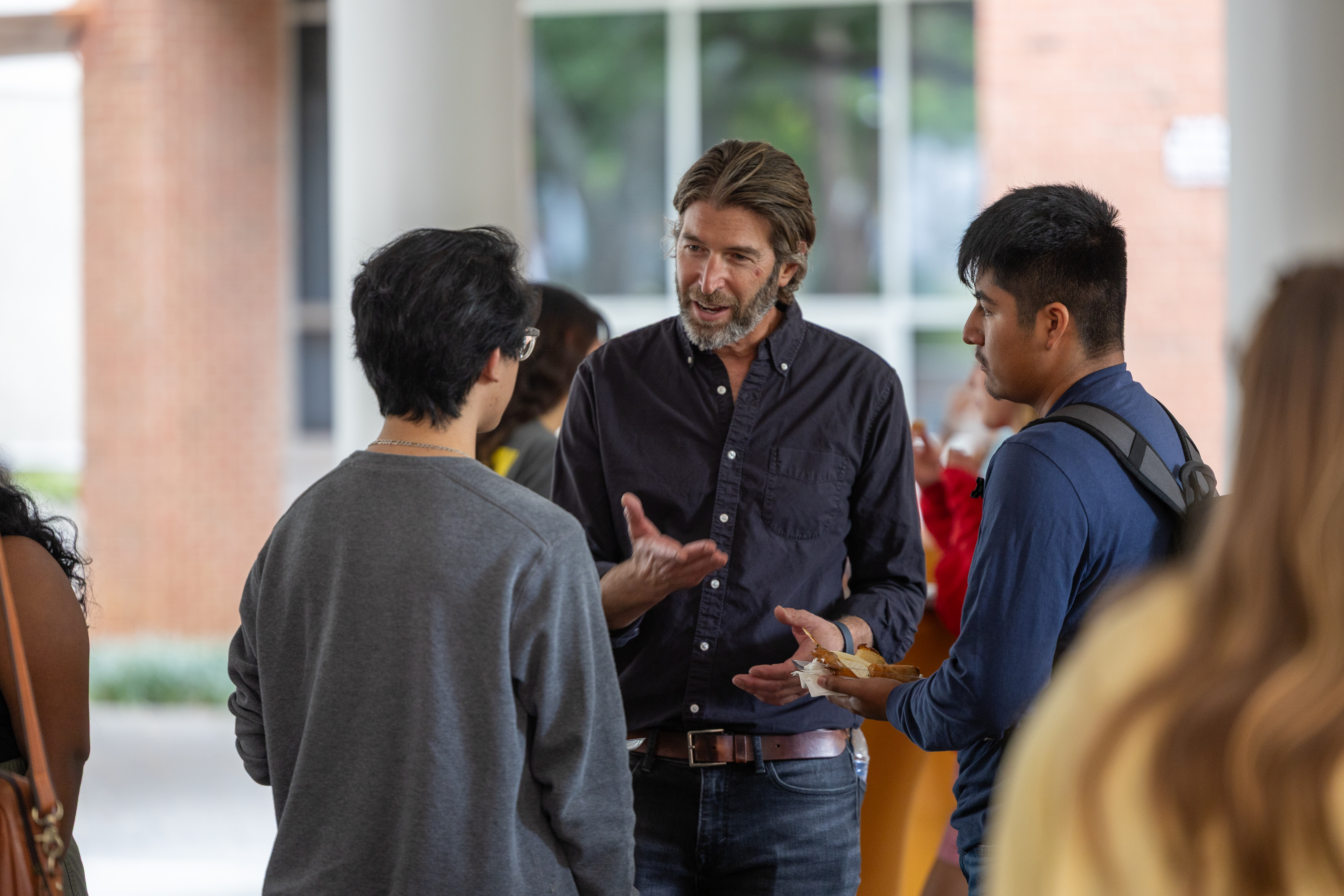
“There’s a narrative out there that design springs fully formed, but it doesn’t. It’s an iterative process—circuitous, full of highs and lows, mistakes and breakthroughs. Each iteration builds on the last,” he told students. His advice to emerging architects was simple but profound: engage with others, listen deeply, and persevere. “If design is driven by ideas, perseverance, and the engagement of other people, the results can be meaningful, powerful, and enduring,” he said.
Students in the audience connected with that honesty. “I also thought it was pretty moving, like the way he was speaking. I could tell that he really felt the project… it was making me emotional because of the stories,” said Madison Turcotte, a second-year M.Arch. student. For her and others, the takeaway was not just about design outcomes but about the depth of empathy that fuels them.